Introduction
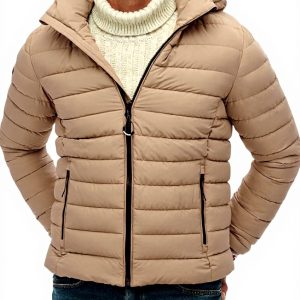
It was during one of those transitional autumn mornings that I first truly appreciated what a good jacket could mean for my daily routine. The air had that crisp quality that signals the shift from summer’s warmth to winter’s chill, and I found myself reaching for something that could bridge that gap comfortably. I had been looking for a jacket that wouldn’t just serve as protection against the elements but would integrate seamlessly into my lifestyle—something I could wear from morning errands to evening walks without feeling either overdressed or underprepared. This search led me to the Superdry Fuji Padded Jacket in beige, and what started as a practical purchase gradually revealed itself as something more significant in how I approach my days during the cooler months.
Real-life Context
My typical day involves a mix of urban navigation and casual outdoor time. I might start with a coffee run in the neighborhood, followed by some work at a local café, and then perhaps a longer walk in the afternoon to clear my head. These activities don’t demand specialized gear, but they do require clothing that can adapt to changing conditions without constant adjustment. Before finding this jacket, I often found myself layering multiple pieces or carrying an extra layer just in case, which added unnecessary bulk and complication to what should be simple daily movements. The challenge was finding a single jacket that could handle the mild chill of early autumn mornings while still being comfortable enough for extended wear as temperatures moderated throughout the day.
The specific need emerged most clearly during those in-between seasons when the weather couldn’t quite make up its mind. Some days would start cold enough to see your breath in the air but warm up significantly by midday, leaving me either overheating in a winter coat or shivering in a light sweater. This jacket entered my life at precisely that moment of seasonal uncertainty, offering what appeared to be a balanced solution—enough insulation for genuine warmth without the suffocating bulk of heavier outerwear. Its beige color appealed to me immediately for its versatility, as it could pair easily with the darker tones I tend to wear during cooler months while still standing out enough to feel intentionally chosen rather than merely functional.
What I didn’t realize at the time was how much the jacket’s design considerations would align with the rhythm of my daily movements. The XL size provided exactly the roominess I needed for comfortable layering underneath without looking oversized or sloppy, while the weight distribution meant I could wear it for hours without feeling weighed down or restricted. These practical aspects became particularly valuable during longer walking sessions when freedom of movement matters as much as warmth retention. The jacket’s construction seemed to understand that daily life involves constant transitions between indoor and outdoor spaces, between activity and rest, between formal and casual contexts.
Observation
Wearing the jacket through various autumnal scenarios revealed its strengths in ways I hadn’t fully anticipated during the initial purchase. The padded filling provided consistent warmth without creating that stuffy, overheated feeling I’ve experienced with other insulated jackets. During morning walks when temperatures hovered around 10 degrees Celsius, the jacket maintained a comfortable microclimate that adapted to my activity level—warmer when I was moving briskly, yet still protective during slower, more contemplative strolls. This temperature regulation became particularly noticeable during longer outings when my body heat would naturally fluctuate, yet the jacket managed to avoid both the chill of insufficient insulation and the swampiness of over-insulation.
The beige color proved more practical than I initially expected. While I chose it primarily for aesthetic reasons, I discovered its functional benefits during the shorter, often overcast days of autumn. The lighter tone seemed to brighten my mood on grey days while remaining neutral enough not to clash with other elements of my wardrobe. More importantly, the color held up well against the occasional light drizzle that characterizes autumn weather, showing water spots less obviously than darker jackets might. This aligned perfectly with the jacket’s basic protection against light rain, which I found sufficient for the brief showers I encountered during my daily routines without promising more water resistance than it could deliver.
I particularly appreciated how the jacket performed during what I’ve come to think of as ‘transition moments’—those points in the day when I move between different environments and activities. Walking from my home to a café, for instance, involves exposure to cooler outdoor temperatures followed by the often overly warm interior spaces of coffee shops. The jacket’s design allowed for easy removal and carrying without becoming a burden, and its relatively lightweight construction meant I could stow it in my bag without sacrificing significant space. When worn indoors briefly, it didn’t create that overwhelming warmth that makes you desperate to take it off immediately, yet provided enough insulation for sitting near drafty windows or in air-conditioned spaces.
The durability aspects became apparent through repeated wear over several weeks. The materials maintained their integrity despite regular use, showing minimal signs of wear at stress points like the elbows and cuffs. This robustness translated into practical benefits during activities that involved leaning against surfaces or brushing against urban elements like rough brick walls or metal railings. The jacket seemed to understand that city life involves constant minor abrasions and contacts that can quickly degrade less sturdy garments. What surprised me was how this durability didn’t come at the cost of comfort—the interior lining remained smooth against my skin, and the outer fabric retained its flexibility rather than stiffening with use.
Reflection
What struck me most profoundly about this jacket wasn’t any single feature but how its various elements worked together to create what I can only describe as thoughtful design. I didn’t realize at the time that this would be so important, but the integration of warmth, comfort, and practicality revealed something about how well-designed objects can subtly improve daily experiences without demanding attention. The jacket became less of a separate item I put on and more of an extension of my movement through the world—something that supported my activities without intruding upon them. This quality is harder to quantify than specifications or features, yet it’s precisely what makes certain possessions transition from being merely useful to being genuinely valued.
This reflection led me to consider how we often prioritize extreme performance in our clothing choices when what we actually need most days is reliable competence. The jacket’s balanced approach to warmth—sufficient for genuine cold but not overwhelming for moderate temperatures—represented a more nuanced understanding of actual human needs than the maximum-insulation focus of many winter garments. It made me question whether we sometimes over-specify our everyday items, seeking specialized performance for situations that primarily require adaptable comfort. The jacket’s success in my daily life suggested that sometimes the most valuable design solution isn’t the most technically advanced but the most appropriately scaled to real-world conditions.
I found myself thinking about how the jacket’s timeless design contributed to its integration into my life. The absence of extreme styling elements meant it didn’t feel tied to a particular fashion moment, which in turn made it feel like a more permanent addition to my wardrobe rather than a temporary trend. This longevity aspect connected to broader questions about consumption and sustainability—how choosing well-designed, versatile items might reduce the need for frequent replacements and multiple specialized garments. The jacket’s ability to serve across various contexts and occasions hinted at a different approach to building a wardrobe, one based on fewer, better-considered pieces rather than numerous situation-specific items.
The comfort of the XL size prompted thoughts about how clothing fit influences not just physical ease but psychological comfort as well. The roominess allowed for natural movement without constriction, which translated into a subtle confidence during daily activities. I noticed I walked differently when wearing the jacket—more freely, with less awareness of the garment itself. This made me consider how often we accept minor discomforts in our clothing as normal, when well-designed pieces can eliminate those friction points entirely. The jacket’s fit seemed to understand that comfort isn’t just about avoiding tightness but about creating space for the body’s natural rhythms and movements throughout the day.
Conclusion
Looking back on these weeks of regular wear, what stands out isn’t any dramatic transformation but the accumulation of small satisfactions—the consistent comfort during morning walks, the reliable warmth when temperatures dropped unexpectedly, the easy integration into my existing wardrobe. The Superdry Fuji Padded Jacket becam one of those rare items that performs its intended function so seamlessly that you stop thinking about it as a separate object and start experiencing it as part of your daily toolkit. Its value emerged not through any single outstanding feature but through the harmonious way all its elements worked together to support rather than complicate my routines.
The experience reinforced my belief that the best everyday items are those that understand the rhythm of ordinary life—the transitions between environments, the variations in activity levels, the need for both protection and breathability. This jacket managed to balance these competing demands without sacrificing either style or functionality, creating a wearing experience that felt considered rather than accidental. Its design choices reflected an understanding that daily life involves constant adjustment, and that clothing should facilitate rather than hinder those adaptations.
What began as a practical solution to autumn’s temperature fluctuations evolved into a broader appreciation for how well-designed objects can enhance daily experiences through thoughtful integration rather than dramatic innovation. The jacket’s success in my life came from its ability to disappear into my routines while consistently performing its protective function—a quality that’s easy to overlook when evaluating clothing but profoundly valuable when experienced day after day. It reminded me that sometimes the most significant improvements to our daily lives come not from revolutionary changes but from refined executions of familiar concepts.
As the season continues to transition toward winter, I find myself reaching for this jacket with a sense of reliability that has become quietly comforting. It has earned its place not through flashy features or extreme performance claims but through consistent, thoughtful execution across the varied scenarios of ordinary life. This integration of quality, comfort, and practical design represents what I’ve come to value most in the items that accompany me through my days—not as statements or specialties but as reliable partners in navigating the world’s everyday challenges and pleasures.